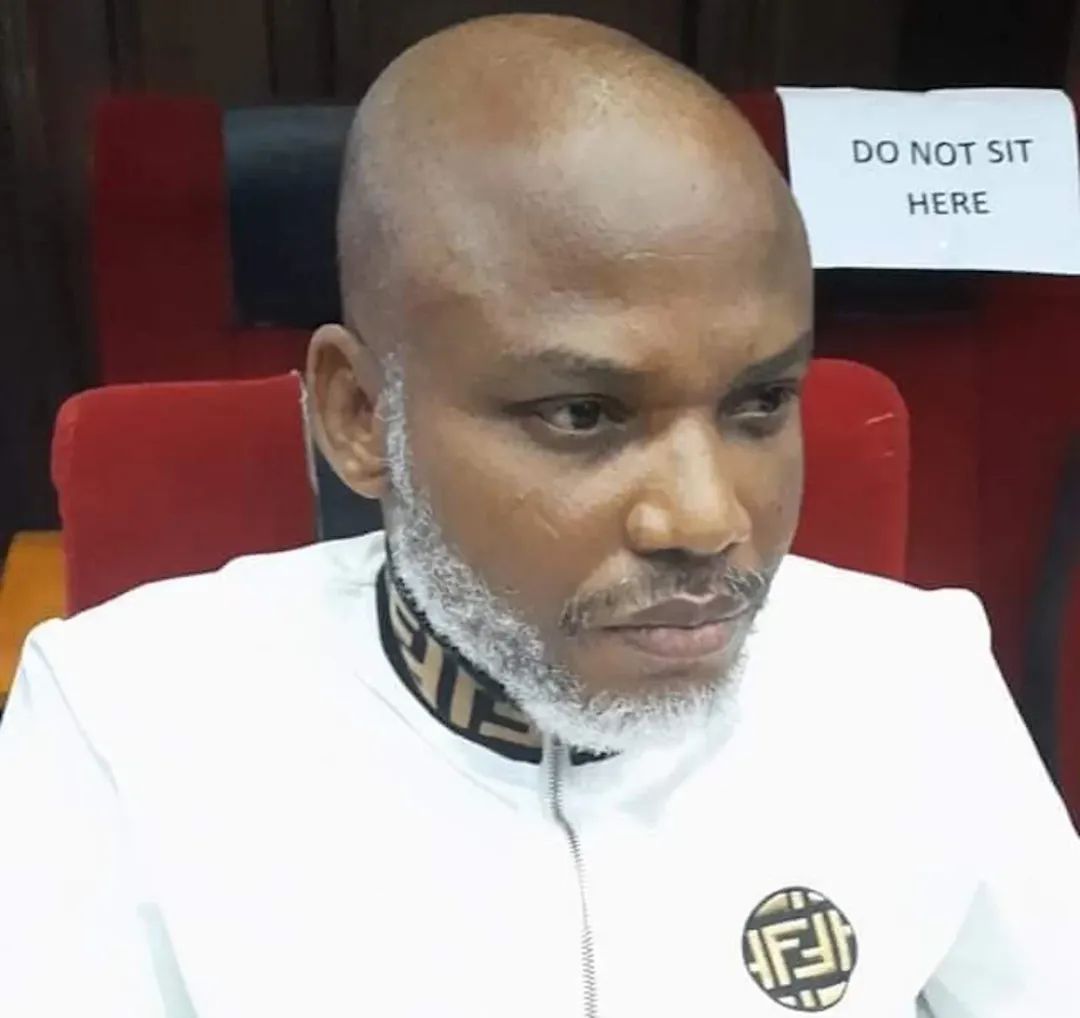
The detained leader of the proscribed Indigenous People of Biafra, Nnamdi Kanu, will today get judgement in his terrorism trial.
Kanu had approached the Court of Appeal, Abuja Division, seeking an order to restrain the Federal High Court from delivering judgment in his ongoing terrorism trial.
However, the court reportedly failed to entertain the motions.
Justice James Omotosho of the Federal High Court fixed today, November 20 for judgment in the case, which has been ongoing since 2015.
The judge fixed the judgment day on November 7 after granting Kanu repeated opportunities to enter his defence.

Kanu had earlier sacked his legal team and opted to defend himself. He, however, turmed around, saying there was no valid charges against him to warrant entering a defence.
In his no-case submission, he argued that the terrorism law under which the Federal Government charged him had been repealed. He, therefore, filed an application, asking the court to free him.
However, Justice Omotosho dismissed his no-case submission and gave him repeated opportunities to defend himself, before finally fixing November 20 for judgment.
In a last-ditch effort, Kanu approached the judge on Tuesday, asking him to adjourn the judgment indefinitely, a request that was turned down.
Displeased, Kanu, last week Wednesday, approached the Court of Appeal in Abuja, praying it to order the lower court to halt scheduled judgment.
Kanu stated that he had filed a notice of appeal against the September 26 ruling of Justice Omotosho, which dismissed his no-case submission and ordered him to defend the terrorism allegations.
In the appeal, with the Federal Government as the sole respondent and Kanu as appellant, he argued that the lower court erred in dismissing his no-case submission without considering the jurisdictional and legal validity of the charges.
Among his claims, Kanu contended that the Federal High Court was wrong to uphold the charges because the Terrorism Prevention and Prohibition Act had been repealed, making the charges invalid.
He also argued that the judge failed to address the constitutional issue of jurisdiction in his ruling on the no-case submission.