Who Has Benefited From The Removal Of Subsidy? If You Know Anybody, Please Point Them To Me–Sowore
According to a report by Daily Post on April 23, 2026, Activist and former presidential candidate, Omoyele Sowore, has renewed criticism of the Federal Government’s decision to remove fuel subsidy, arguing that the policy has not produced the promised economic relief for Nigerians and has instead deepened financial hardship across the country.
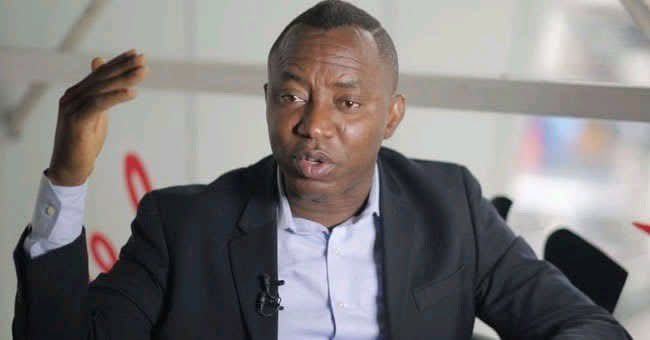
Sowore made the remarks during a live appearance on a current affairs programme, Frontline, aired on Eagle 102.5 FM in Ilese-Ijebu, Ogun State, on Thursday, April 23, 2026. In the interview, he assessed the broader economic consequences of the policy, focusing on its impact on household welfare, inflation, and overall living standards.
He argued that since the removal of the subsidy on petroleum products, many Nigerians have experienced increased economic pressure. According to him, the sharp rise in fuel prices has had a ripple effect on transportation costs, food prices, and the cost of essential goods and services, making daily life more expensive for ordinary citizens.
Sowore stated that these rising costs have placed a significant burden on low- and middle-income households, many of whom are struggling to meet basic needs. He noted that expectations that the policy shift would bring economic stability or improved efficiency have not been met in practical terms.

The activist also expressed concern over broader macroeconomic indicators, including the value of the naira and the country’s inflation rate. He said the continued depreciation of the national currency reflects deeper structural challenges within the economy, while persistent inflation has further reduced the purchasing power of citizens.
He added that wage levels have not increased in proportion to the rising cost of living, creating a widening gap between income and expenses. According to him, this imbalance has made it increasingly difficult for many Nigerians to sustain their livelihoods.
Sowore further criticised the government’s borrowing pattern, arguing that rising national debt levels have added to existing economic pressures. He suggested that the combination of inflation, currency depreciation, and stagnant wages has created a challenging environment for both individuals and businesses.
He noted that when the subsidy removal policy was announced, it was accompanied by assurances that the resulting savings would be redirected into infrastructure development, improved public services, and broader economic reforms.